

An intense 4-hour live course covering the fundamentals of data analysis in motorsport.
Data is everywhere in modern motorsport. The challenge is knowing what to look at, how to interpret it, and most importantly, how to turn it into a decision that improves the car or the driver.
In this course, we’ll take you through the fundamentals of motorsport data analysis from a practical engineering perspective. You’ll learn how data is collected, how different sensors and acquisition systems work, how to structure your data, and how to turn raw channels into useful performance information.
We’ll cover everything from hardware and sensors to software, data channels and math channels, using practical examples throughout the course.
But data analysis is not only about numbers. A big part of working trackside is knowing what to do with the information you have. We’ll also cover the human side of data analysis: how to work with drivers, how to ask the right questions, how to communicate findings clearly, and how to turn complex data into useful feedback.
You’ll also learn how to start analysing data with your own equipment, making the first steps into motorsport data analysis more accessible than ever. By the end of the course, you’ll have a solid foundation in motorsport data analysis and a clear understanding of how data is used to support engineering decisions during a race weekend.
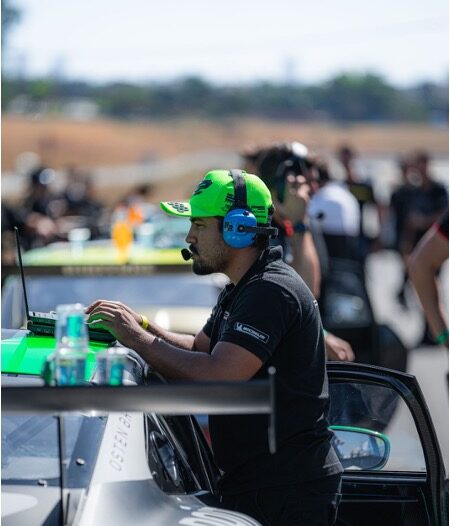
My name is Igor Cruz Lemes. I graduated in Mechanical Engineering from University Center UDF, a small private institution with no specific focus on automotive engineering. As the founder of the university’s Formula SAE team, I had to go after the information myself to learn how to design and build a race car, working across different areas of engineering and eventually discovering vehicle dynamics as my main passion.
Going through that journey alone taught me something important: there is a huge amount of information available today, but there is also a huge amount of poor or disconnected information.
For a long time, I knew a lot of things individually, but I struggled to connect that knowledge and turn it into tangible projects, analysis and engineering decisions.
Through experience with race cars, race bikes and road cars, I gradually built a solid understanding of how theoretical knowledge, when properly structured and combined, translates into vehicle performance and faster decision-making — two essential skills for anyone working trackside in motorsport.
Join our newsletter
Get the latest updates on new courses, exclusive insights from F1 engineers, and special offers delivered to your inbox.

Racetrack Dynamics 2026 All Rights Reserved